

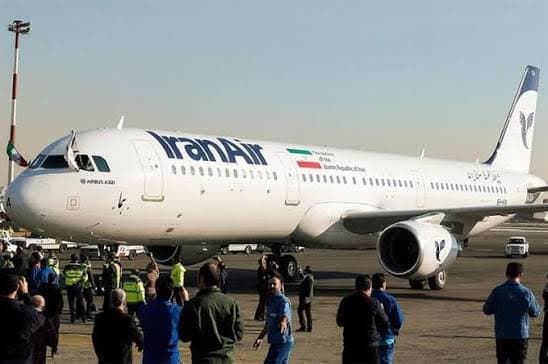
The United States has threatened to enforce a global shutdown of Iranian airlines from September 23, widening its economic pressure on Tehran by warning foreign airports and aviation service providers against supporting the carriers.
US Treasury Secretary Scott Bessent said on Monday that Iranian airlines would be effectively prevented from operating internationally from September 23 if foreign businesses continue providing them with essential services.
Under the threat, airports could face US financial restrictions if they refuel Iranian aircraft, provide landing services or sell tickets for their flights. Bessent said companies that continue such activities could be cut off from the US dollar financial system.
The measure would extend the impact of US sanctions beyond Iranian airlines to third-party companies that facilitate their international operations, increasing the pressure on an aviation sector that has already faced years of restrictions.
Iranian carriers have long struggled to obtain aircraft, spare parts and maintenance services because of US sanctions. Washington earlier this month also imposed sanctions on the remaining Iranian airlines that had not previously been designated, as well as companies outside Iran accused of supporting Tehran’s aviation sector.
The latest threat comes as diplomatic activity surrounding the US-Iran conflict continues, with Iranian officials expected to participate in the United Nations General Assembly in New York.
Recent expectations of possible US-Iran talks had contributed to lower oil prices as traders assessed the prospect of reduced tensions and improved energy flows. The market subsequently rebounded on Tuesday, with Brent crude rising 1.7 percent to $102.06 per barrel and WTI gaining 1.7 percent to $97.40, according to Reuters.
The aviation warning indicates that Washington is continuing to apply economic pressure on Tehran even as the possibility of diplomatic engagement remains part of the wider discussion.
Bessent said the US was applying pressure on Iran at an unprecedented level. His comments followed meetings with Chinese Vice Premier He Lifeng, as Washington seeks cooperation from Beijing and other financial authorities over enforcement of its sanctions regime.
Bessent said Chinese officials had been closely engaged in discussions over the US pressure campaign, including talks with financial authorities such as People's Bank of China Governor Pan Gongsheng. China is a major economic partner of Iran, making its cooperation relevant to Washington's efforts to restrict Tehran's access to international finance.
The United States has also maintained pressure on Iran across other parts of its economy, including energy, shipping, technology, gold and digital assets. Secondary sanctions allow Washington to target foreign businesses that continue transactions or provide services involving sanctioned Iranian entities.
Iran, meanwhile, continues to warn against further US military action. The country's Revolutionary Guard said on Monday that Iran would change its weapons, tactics and targets if Washington escalated the conflict, warning that the geography of the war could expand.
The aviation confrontation comes against a broader regional backdrop that continues to affect global energy markets. Saudi Arabia has increased crude exports through the Strait of Hormuz after attacks disrupted its East-West pipeline and forced some shipments through Yanbu to be halted.
Reuters reported that around 14 million barrels of Saudi crude were loaded onto seven supertankers inside the Gulf on Sunday, helping to ease some supply concerns even as shipping through Hormuz remains disrupted.
The United States' September 23 deadline therefore adds another pressure point to an already strained relationship between Washington and Tehran, with the potential consequences extending beyond Iranian carriers to airports, fuel suppliers, ticketing companies and other international businesses connected to their operations.
For Iran's aviation sector, the threat could further restrict access to international routes and services. For foreign companies, compliance with Washington's warning could become a choice between continuing commercial links with Iranian carriers and maintaining access to the US financial system.