

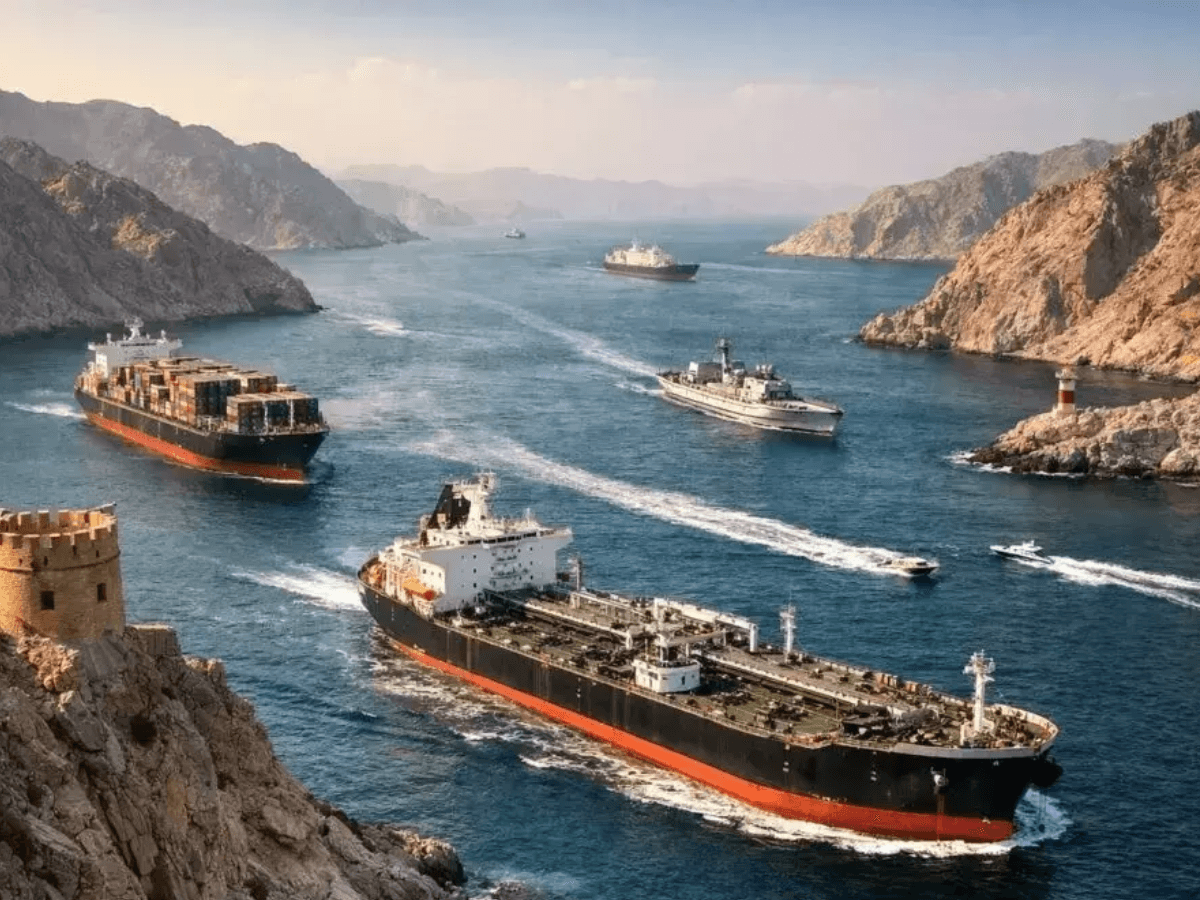
Commercial shipping through the Strait of Hormuz has dropped sharply, even as Saudi Arabia increases crude movements through the waterway to offset disruptions to its Red Sea export route.
Only 17 commodity vessels crossed the Strait of Hormuz over the weekend, compared with 37 a week earlier, according to shipping data reported by Reuters. The latest movement remains far below the estimated pre-war average of about 125 large commercial vessels passing through the route each day.
The visible traffic figures do not represent every vessel operating in the area. Some tankers have continued sailing with their transponders switched off, making their movements difficult to capture through conventional vessel-tracking systems.
Kpler data cited by Reuters had earlier recorded only four commodity vessels crossing the strait on Thursday, compared with a 10-day average of 16. The data also showed that only 13 tankers, mostly very large crude carriers, exited the waterway during the week to September 13.
Despite the reduced vessel count, significant volumes of crude are still moving through the Gulf. Saudi Arabia has increased shipments through Hormuz after attacks disrupted its East-West pipeline, which normally provides an alternative route to the Red Sea.
Kpler data showed that 22 tankers, mostly VLCCs, carrying about 42 million barrels of crude exited Hormuz during the week beginning September 13. Saudi Arabia and Iraq each accounted for 43 percent of the volume.
JPMorgan also estimated that Saudi crude moving through Hormuz averaged about 2.9 million barrels per day over six days, compared with roughly 700,000 barrels per day in August. The increase reflects Riyadh’s greater reliance on its Gulf export infrastructure after disruptions to its Red Sea route.
The change has become necessary as Saudi Arabia’s Yanbu export operations face continued disruption. No visible crude loadings from the Red Sea port have been recorded since September 16, according to the latest shipping data cited by Reuters.
Yanbu had assumed greater importance after the effective disruption of Hormuz, providing Saudi Arabia with an alternative route for moving crude to international buyers. Attacks on the kingdom’s East-West pipeline, however, have compromised that route and forced the country to increase flows from terminals inside the Gulf.
Saudi Aramco is also relying on ship-to-ship transfers to move crude beyond the immediate Gulf shipping constraints. Trade sources told Reuters that the company has sold about 60 million barrels from Ras Tanura for loading through ship-to-ship transfers at Oman’s Sohar port during September and October. The arrangement is expected to generate about 1 million to 1.5 million barrels per day in exports.
The transfers allow Saudi crude to be moved from Gulf terminals towards Oman before being loaded onto vessels bound for Asian markets. China and South Korea are among the major buyers, with additional volumes going to India and Japan.
The workaround is helping maintain crude supplies despite the disruption to Saudi Arabia’s conventional export routes, but it has increased the complexity and cost of transporting oil. Supertanker freight rates for some Gulf-to-Asia voyages have also risen sharply as shipowners price in the risks associated with operating in the conflict-affected region.
Shipping pressure is not limited to Hormuz. At the Bab el-Mandeb Strait, 51 vessels crossed over the weekend, down from 57 during the previous weekend. One of the vessels leaving the waterway was an Aframax tanker carrying about 700,000 barrels of Saudi crude.
The southern Red Sea route has faced its own security challenges following attacks and advances by Yemen’s Houthi group, further limiting the alternatives available to Saudi Arabia and other regional oil exporters.
The resulting pattern is increasingly defined by fewer conventional vessel movements through Hormuz alongside continued crude exports using less visible shipping activity, offshore transfers and alternative routes.
Reuters reported that ship-to-ship transfers near Oman have expanded substantially, with about 2.5 million barrels per day expected to move through the arrangement in September, compared with 1.4 million barrels per day in August.
While these measures are keeping substantial volumes of Middle Eastern crude in international markets, the sharp contraction in visible traffic through Hormuz points to the continuing disruption of a major global energy corridor.