

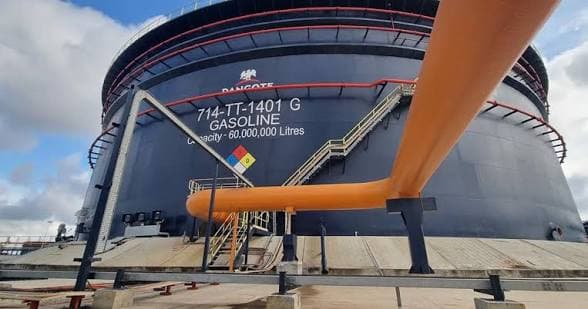
Dangote Petroleum Refinery and Petrochemicals is set to restrict the sale of Premium Motor Spirit (PMS) to major marketers holding valid petrol import licences, in a move that could further reshape Nigeria’s downstream supply market, inside sources have told Petroleumprice.ng.
The development follows the refinery’s growing concerns over the rising volume of imported petrol entering Nigeria despite increased domestic refining capacity. According to market data cited by the refinery, imported PMS accounted for about 43 per cent of total petrol supply in July, significantly reducing the domestic market share available to local refiners.
Sources familiar with the refinery’s position said Dangote would prioritise PMS sales to marketers that do not hold petrol import licences, while companies/marketers actively importing petrol under the Federal Government’s approved import regime may no longer be supplied by the refinery.
The six marketers licensed by the Nigerian Midstream and Downstream Petroleum Regulatory Authority to import PMS are Matrix Energy, A.A. Rano, AYM Shafa, NIPCO, Pinnacle Oil and Gas, and Bovas. The licences issued in May covered a combined 720,000 metric tonnes of petrol, with allocations ranging from 60,000 to 150,000 tonnes.
According to industry sources, the refinery’s position is driven partly by concerns that imported petrol of questionable quality could be blended with locally refined PMS before being distributed into the domestic market. Such blending, the sources said, could make it difficult for consumers and regulators to distinguish between Dangote-produced petrol and imported products, potentially exposing the refinery’s brand to quality-related complaints.
The refinery has also raised concerns over the adequacy of the regulatory (NMDPRA) quality-control infrastructure for imported PMS. Sources said Dangote believes the absence of a standard laboratory with sufficient capacity to independently verify imported petrol could leave room for products that do not meet required specifications to enter the market.
The latest position represents a significant escalation in the refinery’s long-running dispute over petrol import licences. Dangote had previously warned that continued imports could force it to redirect more of its refined products to export markets because holding large volumes of unsold PMS carries substantial storage, financing and inventory costs.
The immediate consequence could be a sharper division in the domestic PMS market, with Dangote increasingly focusing its local supply on non-importing marketers while licensed importers rely more heavily on imported cargoes. This could also intensify competition between locally refined and imported petrol at a time when global crude prices and international supply risks are already exerting pressure on replacement costs.
The refinery’s position is particularly significant because the six import licences were issued at a time when the Federal Government was seeking to balance domestic refining with supply security and market competition. The approved allocations were intended to provide additional supply flexibility, but Dangote has consistently argued that continued imports undermine investment in Nigeria’s refining capacity.
For the downstream market, the key issue is now whether the import licences and Dangote’s supply restrictions can coexist without creating a new layer of supply fragmentation. With imports accounting for about 43 per cent of PMS supply in July, any further reduction in Dangote’s sales to licensed importers could materially alter depot availability, cargo demand and regional pricing dynamics.