

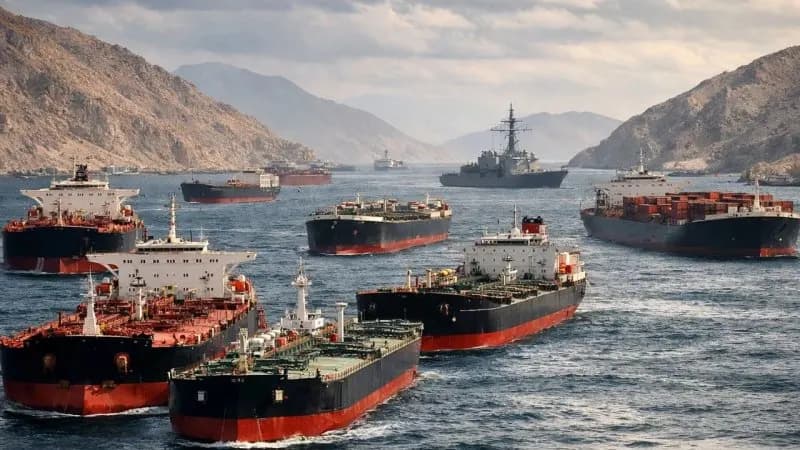
Commercial tanker traffic through the Strait of Hormuz has slowed in recent days as renewed military exchanges between the United States and Iran prompted shipowners to reassess the risks of navigating one of the world's busiest oil transit corridors.
According to Oilprice.com, the decline in vessel movements followed a series of attacks on commercial ships and retaliatory military strikes that have reignited concerns over maritime security despite an existing ceasefire agreement between Washington and Tehran.
The latest escalation began after the container vessel MV Ever Lovely came under attack near the Strait of Hormuz on Thursday, prompting some shipowners to delay sailings while monitoring developments in the Gulf.
In response, the U.S. Central Command (CENTCOM) launched strikes against multiple targets in Iran on Friday, describing the operation as retaliation for attacks on commercial shipping.
Tensions escalated further on Saturday after Iranian forces reportedly struck the Panama-flagged crude oil tanker MT Kiku while it was transiting the Strait of Hormuz. According to CENTCOM, the tanker was carrying more than 2 million barrels of crude oil when it was hit by what the U.S. military described as a one-way attack drone.
Reacting to the incident, CENTCOM said Iran had failed to honour the ceasefire arrangement.
"After yesterday's U.S. strikes in response to the Iranian attack on M/V Ever Lovely, Iran was given a chance to honor the ceasefire agreement but elected not to when its forces launched a one-way attack drone that hit M/T Kiku," the U.S. military said in a statement.
The latest confrontation prompted additional U.S. strikes on multiple Iranian targets, further testing the fragile truce between both countries.
Data compiled by ship-tracking firm Kpler, cited by Bloomberg and reported by Oilprice.com, showed that tanker movements through the Strait have eased noticeably since reaching a weekly peak on June 24, with fewer vessels entering and leaving the strategic waterway.
Industry observers said the slowdown reflects continued caution among vessel owners and operators rather than any physical closure of the shipping lane.
Although commercial navigation through the Strait of Hormuz has continued and more vessels have resumed broadcasting their locations, shipping activity remains below normal levels as operators weigh the risks associated with the renewed hostilities.
The military exchanges come only days after the United States and Iran accused each other of breaching their ceasefire agreement following reciprocal strikes linked to attacks on commercial vessels in the Gulf.
Despite the latest flare-up, reports indicate that both countries have since agreed to halt further attacks ahead of a new round of diplomatic talks expected later this week.
However, analysts say operating conditions around the Strait remain highly volatile, suggesting that a full return to normal shipping activity may take time even if diplomatic engagements continue.
The Strait of Hormuz handles roughly a fifth of global oil trade, making any disruption to vessel traffic closely watched by energy markets, shipowners and crude importers worldwide.