

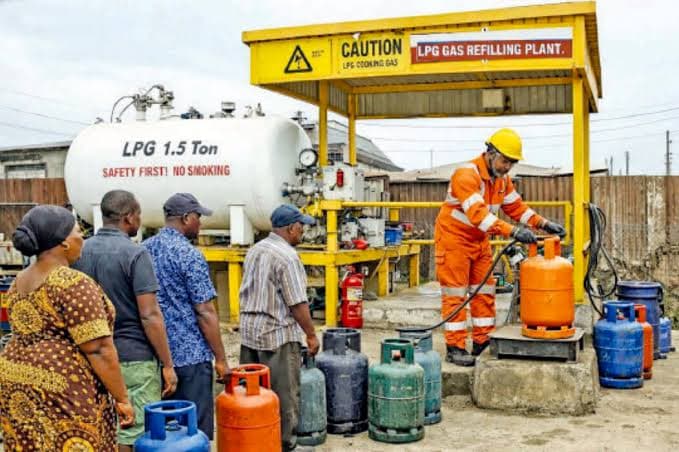
Retail cooking gas prices in Nigeria remain elevated at up to ₦1,700 per kilogram in some locations, despite depot prices holding at ₦1,150 per kilogram across five Lagos suppliers, according to PetroleumPrice.ng market data.
Depot price check by PetroleumPrice.ng showed that Navgas, 11PLC, Nipco, Techno Oil and Rain Oil quoted liquefied petroleum gas (LPG) at ₦1,150 per kilogram. The prices indicate a gap between depot-level quotations and the amounts consumers pay at retail outlets.
The disparity comes as cooking gas prices continue to fluctuate across the country. A market survey by Daily Post on Saturday, October 17, found that LPG sold for between ₦1,300 and ₦1,500 per kilogram at some filling stations in Abuja, including outlets operated by AA Rano, Ranoil and MRS. Smaller LPG retailers charged between ₦1,600 and ₦1,700 per kilogram.
The latest figures suggest that lower depot prices have yet to translate into comparable reductions across all retail outlets. Retail prices also reflect transportation, cylinder handling, distribution expenses, operating costs and marketers’ margins, which can vary by location and supplier.
Lawal Taofeek, spokesperson for Nipco, attributed recent LPG price fluctuations to movements in international petroleum product prices.
“It is due to fluctuations in global energy prices,” he told Daily Post.
Cooking gas prices had fallen to about ₦1,200 per kilogram in some locations in recent weeks before rising again. The market had also recorded price relief in August after Dangote Refinery and depot operators reduced their LPG prices.
Meanwhile, data released by the Nigerian Midstream and Downstream Petroleum Regulatory Authority (NMDPRA) in August showed that LPG imports increased by 44 per cent to 1.3 million metric tonnes, from 900,000 metric tonnes, according to the reported figures.
For consumers, the key issue remains whether lower depot quotations will feed through to retail prices. Although the ₦1,150-per-kilogram quotations reported by PetroleumPrice.ng provide a reference point for the Lagos market, the final price paid by households will depend on distribution costs, retail competition and supply conditions.
Further reductions at the depot level could create room for retail prices to ease, but the speed and extent of any pass-through will depend on how quickly marketers adjust their selling prices and how their operating costs change.