

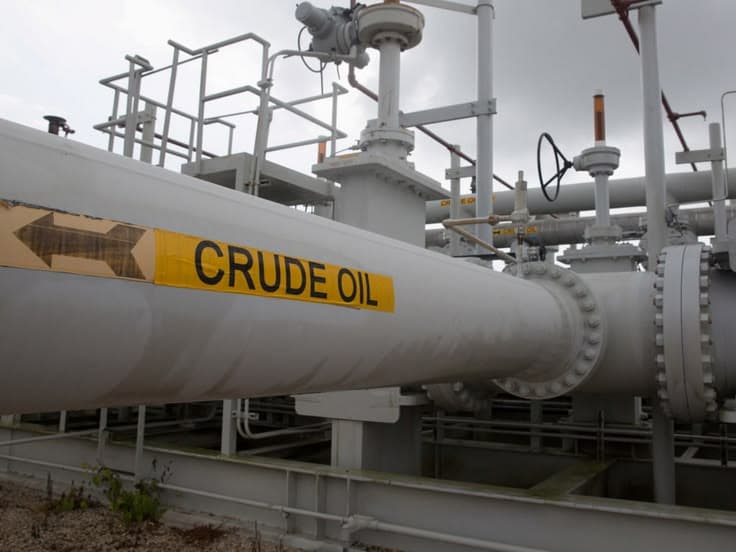
Nigeria's Midstream and Downstream Petroleum Regulatory Authority (NMDPRA) says it is working with the Nigerian Upstream Petroleum Regulatory Commission (NUPRC) to resolve crude oil supply shortages to local refineries, as the government pushes toward refining all of the country's crude output domestically.
NMDPRA Chief Executive Rabiu Umar disclosed this at the 49th Nigeria Annual International Conference and Exhibition (NAICE), organised by the Society of Petroleum Engineers (SPE) Nigeria Council in Lagos. Umar said the federal government intends to refine virtually all future crude output locally rather than exporting it raw, as the country targets crude production of three million barrels per day, marking a departure from Nigeria's decades-old pattern of exporting crude while importing refined products.
Nigeria's installed refining capacity currently stands at about 1.125 million barrels per day, the highest in the country's history, led by the 700,000-bpd Dangote Refinery, which reached its nameplate capacity during tests in June. Dangote supplies 80 per cent of domestic demand and exports to West Africa and Europe.
To meet the three million-bpd target, almost twice the country's current output, the NMDPRA is working with the NUPRC to enforce domestic crude supply obligations under the Petroleum Industry Act, which requires producers to supply part of their crude output to local refineries. The NUPRC estimated June production at about 1.73 million bpd. Umar described the domestic supply requirement as "really, really important" for the sector's expansion.
Nigeria continues to face structural constraints, including crude supply shortages, underperforming state-owned refineries, and concerns over dependence on Dangote Refinery, which is planning an expansion to 1.4 million bpd. Refineries operated by the Nigerian National Petroleum Company Limited (NNPCL) in Port Harcourt, Warri, and Kaduna remain below capacity; NNPCL acknowledged in November 2025 that the facilities cannot match Dangote's fuel quality, underscoring the gap the domestic supply push is meant to close.
State-owned refineries hold a combined potential capacity exceeding 300,000 bpd but have underperformed despite more than $25 billion in public investment between 2003 and 2023. NNPC Ltd is now seeking private partners who would be paid only when the refineries produce. Umar did not specify a timeline for the NMDPRA-NUPRC negotiations.