

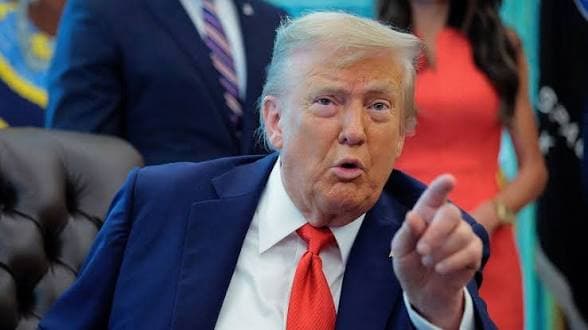
US President Donald Trump on Saturday said he had rejected an Iranian proposal to reopen the Strait of Hormuz and end fighting in the Middle East, leaving the strategic waterway’s reopening uncertain and keeping pressure on global oil supply flows.
Iran said the proposal, transmitted to the United States through Qatari mediators, would reopen the strategic waterway and end regional hostilities within seven days.
Trump said Iran wanted an immediate agreement to reopen the strait because of the economic pressure caused by the disruption.
“I reject their proposal. ... I rejected their deal,” Trump told reporters at the White House before leaving for Tennessee, according to Reuters.
“They want to make a deal to open the Hormuz Strait immediately because they're losing so badly,” he said. “We're winning tremendously.
“They want to make a deal and I think that's fine, I like making a deal too. What they want to do is immediately open the Hormuz Strait ... because they have no money coming in, because they get their money from the Hormuz Strait.”
Iranian Foreign Minister Abbas Araqchi said on Friday that the proposed arrangement would trigger a seven-day countdown to reopening the strait and a pause in regional fighting.
“If there is seriousness on the US side to come to a deal and reopen the Strait of Hormuz, everything is now prepared,” Araqchi said. If the US agreed, the warring parties could begin wider talks “on mutually agreed subjects.”
Iranian President Masoud Pezeshkian said Tehran was ready for talks on its nuclear programme and other issues, but would not accept “bullying or coercion”.
“Iran is not seeking war, but will defend itself against pressure, threats and attacks,” Pezeshkian said, adding that Tehran had already agreed that “we're not supposed to develop nuclear weapons”.
The development comes as the conflict continues to disrupt oil flows through the Strait of Hormuz, a critical shipping route for global energy supplies, while attacks involving Houthi forces and Saudi interests have added further supply and infrastructure risks.
For Nigeria’s downstream market, prolonged disruption around the waterway could keep crude, petroleum-product, freight and insurance costs elevated, with potential implications for the replacement cost of imported products.