

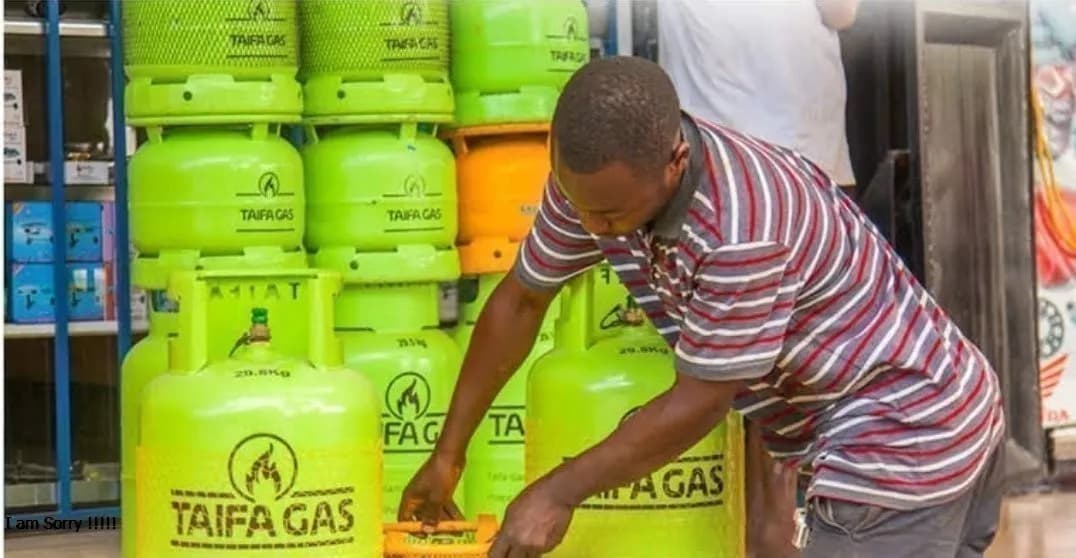
Nigerians are paying a steep price for cooking gas, even as retailers enjoy profit margins of up to 35% on every truckload sold in Lagos and Ogun States. This exclusive analysis by Petroleumprice.ng reveals how depot pricing, logistics, and retailer markups combine to deepen the burden on households.
Depot Price vs. Retail Reality
At depots such as 11 Plc, Ardova, NIPCO, and Rainoil, the average price of cooking gas currently sits around ₦840 per kilogram, while NAVGAS offers slightly lower at ₦830/kg. Dangote, meanwhile, has entered the market at ₦760/kg, undercutting the competition.
A trader buying the minimum 5,000kg consignment at the benchmark ₦840/kg spends ₦4.2 million. Adding ₦200,000 for trucking and ₦50,000 for loading and miscellaneous charges brings the total landing cost in Lagos to about ₦4.45 million, or ₦890/kg.
Despite this, retailers sell to consumers at ₦1,200/kg in Lagos and ₦1,300/kg in Ogun State. At Lagos prices, this translates to a ₦310 margin per kilogram, yielding roughly ₦1.55 million profit on a single 5,000kg batch, a return of about 35%. In Ogun, the margin rises to ₦410/kg, pushing profits to ₦2.05 million per truckload.
Consumers Pay the Price
For households, these figures are devastating. Refilling a standard 12kg cylinder now costs ₦14,400 in Lagos and ₦15,600 in Ogun State. With Nigeria’s average monthly household income standing at just ₦62,000 (NBS), families are forced to spend nearly a quarter of their earnings on cooking fuel alone.
Many households have already begun rationing their gas use or reverting to cheaper but less safe alternatives, such as charcoal and firewood, thereby exposing themselves to health and environmental risks.
Can Dangote Disrupt the Market?
Dangote’s recent announcement to supply petroleum products directly to retail outlets could reshape the market. At ₦760/kg, Dangote’s entry price is significantly lower than the ₦840/kg middle ground. If passed down fairly, consumers could save about ₦480 per 12kg cylinder—roughly ₦4,800 per household each year.
Given that more than 12 million households rely on LPG, the ripple effect could be substantial. Analysts believe Dangote’s direct-to-market strategy has the potential to curb profiteering, restore competitive pricing, and ease the burden on consumers—if regulators enforce fair distribution.
A Market Built on Margins
While retailers argue that logistics and overheads drive up prices, the numbers suggest otherwise. A ₦2 million profit on a single 5,000kg truckload reflects a market structure tilted in favour of sellers at the expense of struggling households.
Until reforms and new supply chains like Dangote’s initiative take effect, Nigerians will continue paying heavily for what should be an affordable household necessity.